CELPIP Writing Spell Check & Retake Rules: What You Must Know
The CELPIP writing test has a manual spell-checker but no auto-correct function. About retaking, administrators forbid candidates from retaking only the writing section. A $55 CAD score re-evaluation exists instead, letting candidates challenge a low writing score without booking a new four-hour test session.
 Matthew ZareCELPIP Teacher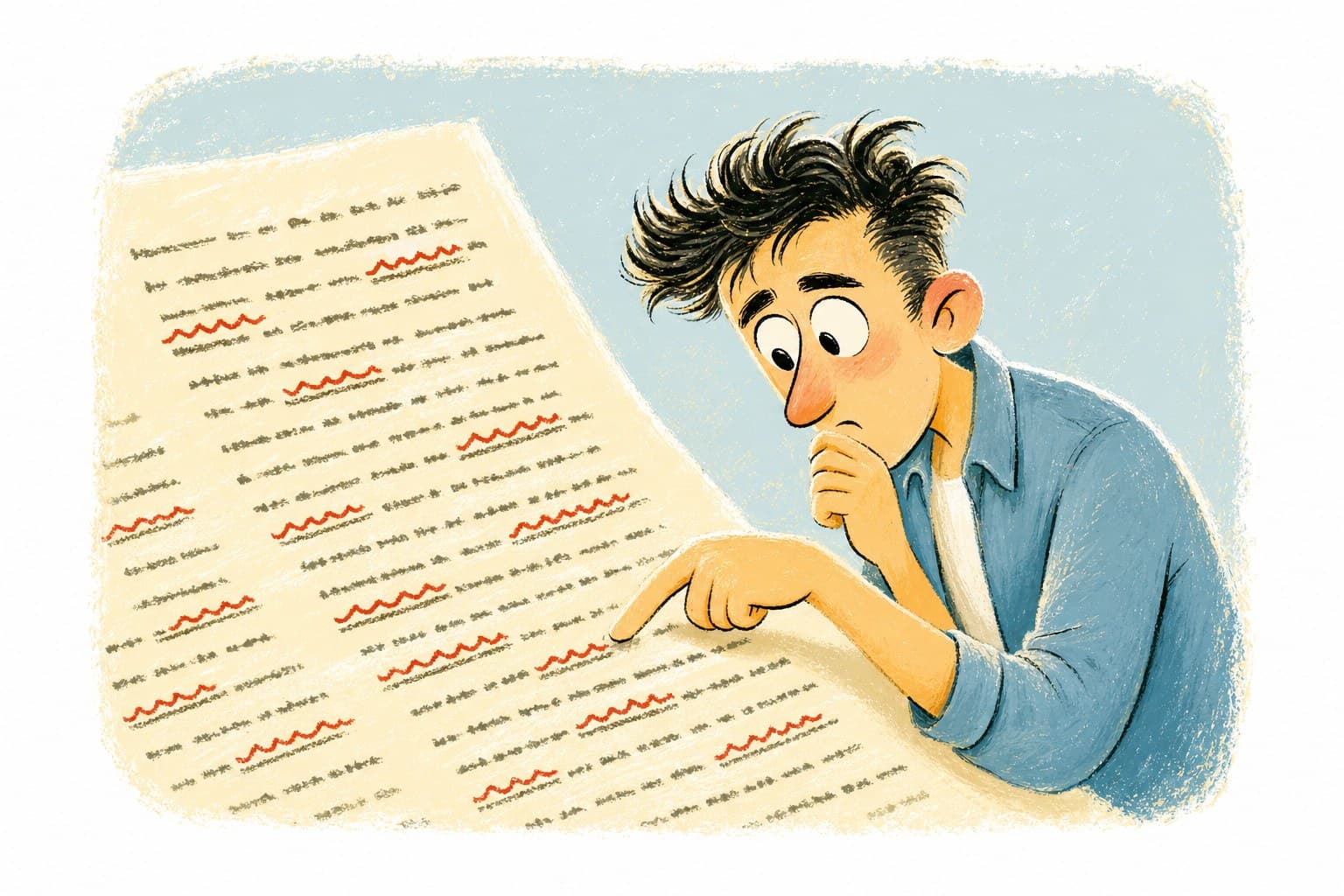
Does the CELPIP Writing Test Have Spell Check?
Yes, the CELPIP test features an automatic spelling checker. The software underlines misspelled words in real time. It shows a dropdown list of suggested corrections next to each flagged word. A candidate must click the underlined word and manually select the correct spelling from that list; the system will not fix anything on its own, which means a misspelled word left untouched at the end of the test stays wrong on the final submission.
This checker runs continuously during both writing tasks, the email-response task (task 1) and the survey-response task (task 2), without needing to be turned on or refreshed. It flags a typo the moment a candidate finishes typing a word and moves to the next one. The dropdown typically offers two to four alternative spellings ranked by similarity to what was typed. A candidate can also simply retype the word manually instead of clicking a suggestion, and either method produces the same result on the final transcript.
The Danger of Relying on the Spelling Checker
The spelling checker corrects spelling. It does not touch grammar. It ignores sentence structure entirely, and a test-taker who treats the tool as a full proofreader is gambling with the Vocabulary and Readability scoring categories that human raters assess separately from spelling accuracy. Consider a candidate writing about a policy change at work who means to say the announcement will "affect" morale. The spelling checker flags nothing if that candidate accidentally types "effect" instead, because both words are spelled correctly on their own. A human rater reading the finished response sees a homophone error that muddies meaning, and that error pulls down the Vocabulary score even though the on-screen tool showed zero red underlines.
The same blind spot applies to subject-verb agreement, article usage, and run-on sentences. A sentence like "The manager have already told the staffs about the new policy" contains three separate errors: a verb agreement mistake, an uncountable noun treated as plural, and no spelling mistake at all. The checker leaves every one of those errors unmarked because every word is spelled correctly. Candidates who finish typing and immediately click submit, trusting a clean screen of black text as proof of a clean response, are the ones most likely to lose points they never saw coming.
Does CELPIP Have Auto-Correct Software?
CELPIP does not feature auto-correct. The interface will not fix capitalization, punctuation, or spelling automatically as a candidate types, unlike a smartphone keyboard or a word processor with live grammar suggestions. A candidate who types "toronto" instead of "Toronto" sees no automatic fix and no warning; the lowercase letter stays on the page exactly as typed. Raters count this kind of missed capitalization on proper nouns like "Canada" or "Toronto" against the Language Use score, and repeated instances compound the penalty across both writing tasks.
The absence of auto-correct also means punctuation errors survive untouched. A missing period between two independent clauses does not trigger any visual warning. Neither does a comma splice, and neither does a missing apostrophe in a contraction like "dont" or "cant." Candidates coming from typing environments that quietly fix these issues, such as a phone keyboard or Google Docs, need to unlearn that dependency before test day or risk submitting a response with small mechanical errors they never had to catch by hand before.
Can I Retake the CELPIP Writing Section Only?
Candidates cannot retake only the writing section. Paragon Testing, the organization that delivers CELPIP under the Prometric testing network, requires every retake to cover all four components: Listening, Reading, Writing, and Speaking. A candidate who scores a 7 in Writing but a 9 in every other section still sits through the entire test again to generate one new writing number. Paragon's own policy also caps how quickly that retake can happen: a candidate may not register for more than one test session within five (5) calendar days of another, so last-minute back-to-back attempts are not an option.
The financial case against a full retake is direct. CELPIP-General costs $299 CAD plus tax per sitting (see the cost page), and that fee buys one complete attempt at all four skills, not a targeted redo of Writing alone.
Need more details about price and rule? Read "How Much Does CELPIP Cost in 2026? Fees, Refunds & More"
The $55 CAD Alternative: CELPIP Score Re-evaluation
A CELPIP score re-evaluation lets a candidate challenge the Writing score without a full retake. The request must go in within exactly six (6) months of the original test date, filed directly through the candidate's CELPIP account. The fee is $55 CAD plus tax per component, rising to roughly $110 CAD plus tax if a candidate re-evaluates both Writing and Speaking together. Only Writing and Speaking qualify for this process because Listening and Reading are scored by computer rather than by a human rater, so requesting a re-evaluation of either of those two sections almost never changes the outcome.
The mechanics of the refund are what remove the risk. If the re-evaluation raises the score, Paragon refunds the full $55 fee to the candidate for that component. The score can never drop during re-evaluation, only rise or stay the same. Results typically arrive within one to two weeks of submitting the request and payment, and a different senior rater, not the original one, conducts the re-score. A candidate effectively pays $55 CAD to find out whether the first rater's judgment holds up, and gets that money back the moment it does not.
Is a CELPIP Score Re-evaluation Worth the Money?
Yes, for most candidates sitting just below their target CLB level, a re-evaluation is worth the $55 CAD. A raised score refunds the fee entirely, and a confirmed score costs less than one-fifth of a full retake.
A candidate who scored an 8 in Writing but needs a 9 for a specific Express Entry point threshold is a strong fit for this option, especially if the gap is a single band. A candidate whose Writing score came in two or more bands below every other section, however, has a different problem: that gap usually points to a genuine performance issue rather than a scoring error, and a re-evaluation is unlikely to close it.
Retaking the full test still makes sense in narrower cases. A candidate who suspects a system-wide technical failure during the test, one who reported a test-day issue to staff within 24 hours as required by policy, has a stronger claim through a different channel than re-evaluation. A candidate who simply was not ready on test day and knows it should treat a retake as a fresh attempt at every skill, not just Writing, and should build in real study time before booking it.
Read more: CELPIP Scores for Canadian Immigration: CLB Levels, Express Entry & PR Requirements (2026)
Full Retake vs. Score Re-evaluation: A Direct Comparison
| Factor | Full Retake | Score Re-evaluation |
|---|---|---|
| Cost | $299 CAD plus tax | $55 CAD plus tax per component |
| Sections covered | Listening, Reading, Writing, Speaking | Writing and Speaking only |
| Deadline to request | Book any time, subject to the 5-day rule | Within 6 months of the test date |
| Turnaround | Usually a few business days after the new test | 1 to 2 weeks after submitting the request |
| Risk if unsuccessful | Full fee lost, no refund | Fee kept only if the score does not rise |
| Best fit | Candidates who missed several sections, or who had a genuine test-day issue | Candidates one band short in Writing or Speaking alone |
Tactical Strategies for the CELPIP Writing Interface
A disciplined time split is better than a rushed one. Spend three to four minutes planning each response before typing a single word, then write for the most of the allotted time, and reserve the final three minutes strictly for reviewing the red-underlined words the spell-checker has flagged. This sequence forces a candidate to fix errors with time still on the clock instead of noticing them after submission.
Both CELPIP writing tasks require 150 to 200 words, and the live word counter in the corner of the screen tracks this in real time, so candidates should monitor the counter throughout the response rather than checking it only once at the end. A response that is below 150 words costs points for Task Fulfillment regardless of how strong the grammar is elsewhere.
Candidates should click every red-underlined word, read the suggested corrections carefully, and reject incorrect suggestions rather than clicking the first option out of habit. They should also scan proper nouns for missing capital letters, since the spell-checker will not catch a lowercase "canada" on its own. Reading the response once silently for grammar, separate from the spell-check pass, catches the agreement and article errors the software ignores entirely.
Typing speed and screen familiarity matter as much as review habits. CELPIP is a computer-delivered test, so a candidate who normally writes by hand loses time hunting for keys instead of composing sentences. Practicing on a standard keyboard, in the same font and screen layout the real interface uses, removes that friction before it costs any of the four to five minutes a candidate needs for planning. A candidate who has never typed a timed 200-word response before test day is spending part of the exam learning to type, not writing.
Building this habit in practice matters more than reading about it once. A candidate who rehearses the same three-minute review sequence, click flagged words, reject bad suggestions, scan capitalization, read once for grammar, during every timed practice test performs it automatically on the real exam.
Adrenaline on test day makes it easy to skip the final check and submit a response full of fixable errors instead. Treating that review window as a fixed, non-negotiable step of the writing process is what separates candidates who convert a shaky first draft into a passing score from those who do not.
Good to know
Frequently Asked Questions
Does the CELPIP writing test have spell check?
Yes. The CELPIP writing test includes an automatic spelling checker that underlines misspelled words and offers a dropdown of suggested corrections, and the candidate must click to accept a fix.
Does CELPIP have auto-correct?
No. CELPIP does not auto-correct capitalization, punctuation, or spelling as a candidate types, so errors like a lowercase "toronto" or a missing period stay on the page unless the candidate fixes them manually.
Can I retake the CELPIP writing section only?
No. Paragon Testing requires candidates to retake all four components, Listening, Reading, Writing, and Speaking, together, and a candidate cannot pay to redo Writing in isolation.
How much does a CELPIP writing re-evaluation cost?
A CELPIP score re-evaluation costs $55 CAD plus tax per component, and the fee is fully refunded if the re-evaluation raises the score.
What are the limitations of the CELPIP spelling checker?
The CELPIP spelling checker only catches misspelled words; it does not detect grammar errors, wrong word choices like homophones, missing capitalization, or punctuation mistakes.
Is a CELPIP score re-evaluation worth the money?
For most candidates who are one band short of their target CLB level in Writing or Speaking, yes, since the fee is refunded on any increase and costs far less than a full retake.
Ready to put this into practice?
Apply what you learned with CELPIP practice questions in the real test format and get instant AI feedback on your answers.
Start Writing PracticeAbout the author


 Matthew Zare

Discussion
No comments yet. Be the first to share your thoughts.