Conditionals in English: 5 Types, Examples and Free PDF
The five conditionals in English, zero to mixed, with the formula for each, everyday examples, the mistakes learners make and a free PDF with exercises.
 Matthew ZareCELPIP Teacher
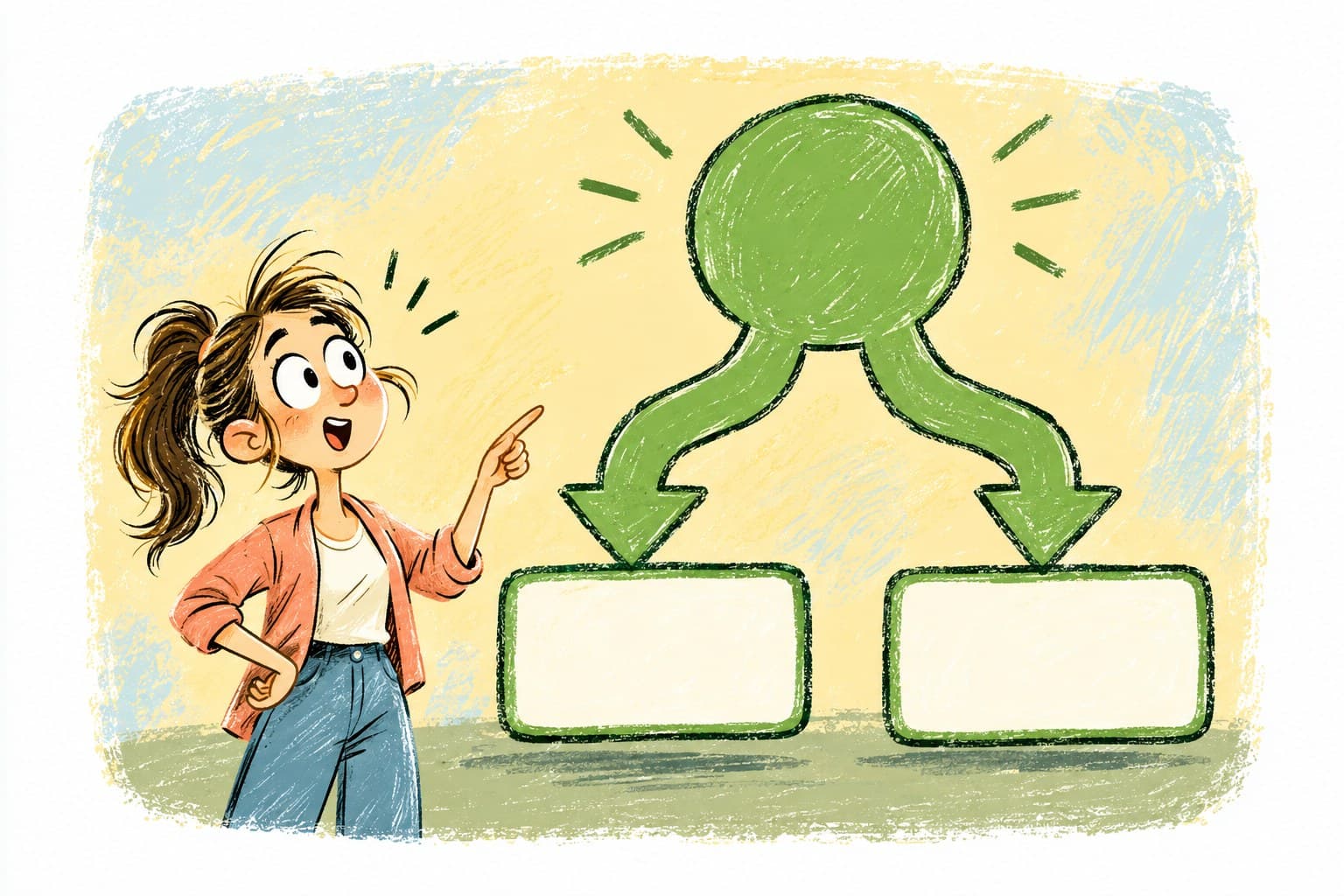
Conditional sentences describe a condition and its result. They have two parts: an if clause (the condition) and a result clause. English has five types: zero (general truths), first (real future), second (imagined present or future), third (imagined past) and mixed. The basic pattern is if + condition, result: "If it rains, we'll stay home."
If you are preparing for CELPIP, conditionals are one of the easiest ways to show a range of grammar when you give advice or make a prediction. The section near the end of this page shows how, and you can practise out loud in our AI-scored Speaking practice.
Free PDF: the conditionals chart, the common mistakes and 16 exercises with answers, ready to print. No sign-up needed.
Free conditionals PDF: a chart of the zero, first, second, third and mixed conditionals with examples, the common mistakes and 16 exercises with answers.
PDF · 9 pages · 1.3 MB
What are conditionals?
Conditionals are sentences that say what happens, or what would happen, if something else is true. The if clause sets up the situation. The result clause tells you the outcome.
Here are all five types side by side.
| Type | Use it for | Pattern | Example |
|---|---|---|---|
| Zero | things that are always true | If + present, present | If you heat ice, it melts. |
| First | a real possibility in the future | If + present, will + verb | If the bus is late, I'll text you. |
| Second | an imagined or unlikely situation now or in the future | If + past, would + verb | If I had a car, I would drive to work. |
| Third | an imagined past that did not happen | If + had + past participle, would have + past participle | If I had left earlier, I would have caught the train. |
| Mixed | a past condition with a present result, or the reverse | If + had + past participle, would + verb (reverse: If + past, would have + past participle) | If I had studied nursing, I would be working in a hospital now. |
The quickest way to choose is to ask two questions. Is it real or imagined? Is it about the past, the present or the future? The answers point you to the right row.
What is the zero conditional?
The zero conditional is for facts and habits: things that always happen when the condition is true. Both clauses use the present simple.
- If you mix blue and yellow, you get green.
- If I work a late shift, I take a taxi home.
- If the temperature drops below zero, the lake freezes.
In the zero conditional you can swap if for when and the meaning stays the same: "When I work a late shift, I take a taxi home."
What is the first conditional?
The first conditional is for a real possibility in the future. The if clause uses the present simple, and the result clause uses will plus the base verb.
- If it snows tonight, the schools will close.
- If you call before noon, they'll deliver today.
- If I get the job, I'll move to Calgary.
The rule learners break most often: no will in the if clause. "If it will snow" is wrong, even though the snow is in the future. The present simple already does that job.
You can also use other modals or an instruction in the result clause: "If you finish early, you can leave", "If the alarm goes off, leave the building."
What is the second conditional?
The second conditional is for situations you imagine: things that are not true now, or are unlikely in the future. The if clause uses the past simple, and the result clause uses would plus the base verb.
- If I had more time, I would take a cooking class.
- If my apartment were bigger, I would invite everyone over.
- If you won the lottery, what would you do?
The past tense here does not mean past time. "If I had more time" is about now. It just shows the situation is imagined.
If I were you. With be, the second conditional uses were for every person: "If I were you", "If she were here". In everyday speech many people say "If I was you", but were is the standard form in writing and the safer choice on any test. "If I were you, I would..." is also one of the most useful advice phrases in English.
The difference between the first and the second conditional is how likely you think something is. "If I get the job, I'll move" means you think you might. "If I got the job, I'd move" sounds more like a dream.
What is the third conditional?
The third conditional is for the past: you imagine a different past and its result, usually to talk about regret or relief. The if clause uses had plus the past participle, and the result clause uses would have plus the past participle.
- If I had left earlier, I would have caught the train.
- If we had booked in advance, we would have paid less.
- If she hadn't called me, I would have missed the meeting.
In speech, both halves get shortened to 'd: "If I'd known, I'd have called." The first 'd means had, and the second means would.
What are mixed conditionals?
Mixed conditionals join two different times: a condition in one time and a result in another. The common one is a past condition with a present result.
- If I had studied nursing, I would be working in a hospital now.
- If we hadn't moved to Halifax, we wouldn't know our neighbours.
The other kind is a present situation with a past result:
- If I weren't so shy, I would have spoken at the meeting.
- If he were more organized, he wouldn't have missed the deadline.
Can you use unless, as long as and provided that instead of if?
Yes. Each one changes the meaning slightly, so it helps to know which is which.
| Word | Meaning | Example |
|---|---|---|
| unless | if not | Unless you book early, the seats will be gone. |
| as long as | only if | You can borrow the car as long as you bring it back by 6. |
| provided that | only if (more formal) | The refund will be issued provided that you keep the receipt. |
| in case | to be ready if something happens | Take an umbrella in case it rains. |
Unless already contains "not", so do not add another one: "Unless you hurry, you'll miss the bus", not "Unless you don't hurry". And in case is not the same as if. "Take an umbrella if it rains" means take it when it is already raining. "Take an umbrella in case it rains" means take it now, just to be ready.
Where does the comma go in a conditional?
Put a comma after the if clause when it comes first. Leave the comma out when the result comes first.
- If it rains, we'll stay home.
- We'll stay home if it rains.
Both orders are correct. Starting with the result is often more natural in speech, and starting with if puts the focus on the condition.
What mistakes do learners make with conditionals?
The most common mistakes are putting will or would in the if clause and mixing the patterns of two types. Here are the ones I correct most often.
| Mistake | Correct | Why |
|---|---|---|
| If it will rain tomorrow, we'll cancel. | If it rains tomorrow, we'll cancel. | No will in the if clause of the first conditional. |
| If I would have known, I would have called. | If I had known, I would have called. | The third conditional uses had in the if clause. |
| If I would be rich, I would travel. | If I were rich, I would travel. | The second conditional uses the past in the if clause. |
| If I had more money, I will buy a house. | If I had more money, I would buy a house. | A past if clause needs would, not will. |
| Unless you don't hurry, you'll miss the bus. | Unless you hurry, you'll miss the bus. | Unless already means "if not". |
| If I didn't miss the bus yesterday, I would have arrived on time. | If I hadn't missed the bus yesterday, I would have arrived on time. | An imagined past needs had plus the past participle. |
A good habit: when you hear yourself say would in the if clause, stop and check. In almost every case, it belongs in the other half of the sentence.
How do conditionals help on the CELPIP test?
CELPIP rates grammar inside Readability in Writing and inside Listenability in Speaking, and in Speaking, variety of sentence structure is one of the things it looks at. CELPIP's descriptions of the higher levels talk about control of a range of complex structures. CELPIP does not require conditionals, and no single structure raises a score on its own. In my experience, though, a correct conditional is one of the most natural ways to show that range, because real advice and real predictions already contain "if". (How CELPIP scores grammar explains where grammar sits in each area.)
Here is where they fit.
Speaking Task 1, Giving Advice. The second conditional gives you the classic advice frame, and the first conditional explains the result. Imagine a friend who can't decide whether to take a night course.
- Plain: "You should take the course. It is good for your career."
- With conditionals: "If I were you, I would sign up for the evening course. If you start in January, you'll finish before the busy season at work, and you'll have the certificate when you apply for the supervisor job."
The Speaking Task 1 giving advice template shows how to build a full answer around frames like this.
Speaking Task 4, Making Predictions. Most predictions use will, but a first conditional adds variety: "If the rain keeps up, the family will probably move the picnic under the shelter." The Speaking Task 4 template shows how many predictions to aim for and how to order them.
Speaking Task 5, Comparing and Persuading. Conditionals let you show the listener what each choice leads to: "If you choose the cabin by the lake, you'll have more space for the kids. And if the weather turned bad, you would still have a fireplace inside."
Writing Task 1, an email. The second conditional is the polite request frame: "I would be grateful if you could send me the new schedule by Friday." It sounds far more polite to a manager or landlord than "Send me the schedule."
If your answers still sound flat, the free Listenability lesson covers the rest of what makes Speaking easy to follow. Conditionals work best alongside modal verbs for tone and linking words for flow.
Practise it out loud: record a Speaking Task 1 answer in our AI-scored Speaking practice and use one "If I were you" and one first conditional. Your first practice set in each Speaking task is free once you sign up, with up to three AI-scored tries.
Can you choose the right conditional?
Pick the better option for each sentence. Answers are below.
- If you press this button, the machine ___. (stops / would stop)
- If it ___ tomorrow, we'll eat inside. (rains / will rain)
- If I ___ you, I would talk to the manager. (were / am)
- If we had left on time, we ___ the start of the movie. (wouldn't have missed / won't miss)
- ___ you leave now, you'll miss the last bus. (Unless / As long as)
- If she had taken the job in Toronto, she ___ there now. (would live / will live)
Answers:
1. stops (zero conditional: a fact about the machine).
2. rains (no will in the if clause).
3. were (second conditional advice).
4. wouldn't have missed (third conditional).
5. Unless (if you don't leave now).
6. would live (mixed: past condition, present result).
Good to know
Frequently Asked Questions
How many conditionals are there in English?
Most grammar books teach five: zero, first, second, third and mixed. Some count only four and treat mixed conditionals as combinations of the second and third. Either way, the patterns are the same.
Is "If I was you" wrong?
It is common in casual speech, and most listeners will not notice it. In writing and on a test, "If I were you" is the standard form, so it is the safer choice. The same goes for "if he were" and "if it were".
Can the result come first in a conditional sentence?
Yes. "We'll stay home if it rains" means the same as "If it rains, we'll stay home". When the result comes first, you do not need a comma.
Which conditional is used for giving advice?
The second conditional, usually in the frame "If I were you, I would...". The first conditional is useful next to it to explain the result of the advice: "If you book now, you'll get a better price."
Is there a conditionals PDF?
Yes. CELTESTPIP's free conditionals PDF has the chart of all five types, unless and in case, the common mistakes and 16 exercises with answers, ready to print. You can view and download it free on this page, without signing up.
Ready to put this into practice?
Apply what you learned with CELPIP practice questions in the real test format and get instant AI feedback on your answers.
Browse Practice QuestionsAbout the author


 Matthew Zare
Discussion
No comments yet. Be the first to share your thoughts.